
prediction
measurement
metrics


Our last post talked about how and why it's difficult to know if an AI Decisioning system actually does what it says on the label, and the fact that it's almost certain that it does not given the predominant technology used by 99% of the industry. Now we move on to what can be done about this.
From Predictions to Counterfactuals
There is a much better way to determine the "next best action" for a customer, and it’s grounded in a whole different branch of the AI family tree: Causal Inference. This is not just a small tweak to how we generate models. Rather, it is a whole new branch of science which seeks to answer the question of "why". Why does one thing cause another... Or, what was the root cause of literally anything that has happened.
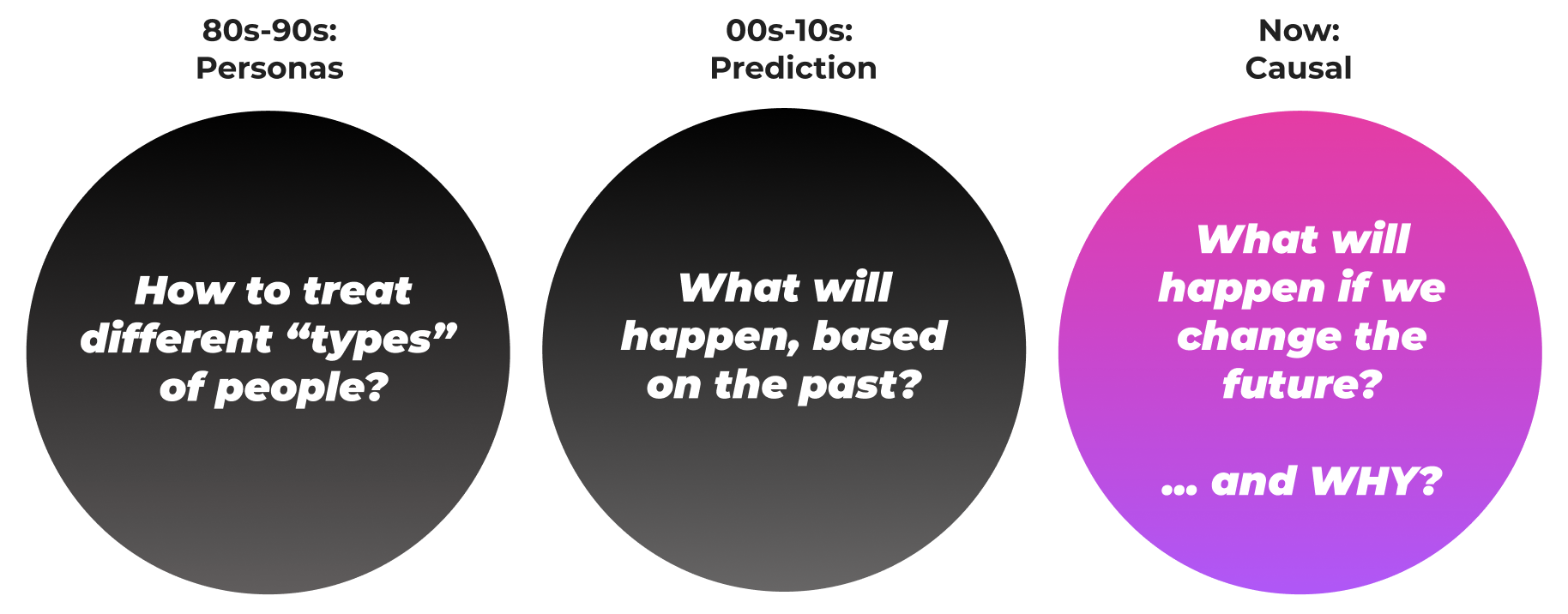
As soon as you understand the causes driving something you care about, you let a powerful genie out of its bottle. You're able to simulate what would happen if you acted differently. The difference is transformative because it lets us find out what would happen if we changed the future by some type of intervention (which, in the marketing world, could be a new campaign, a promotional discount, a product launch, etc).
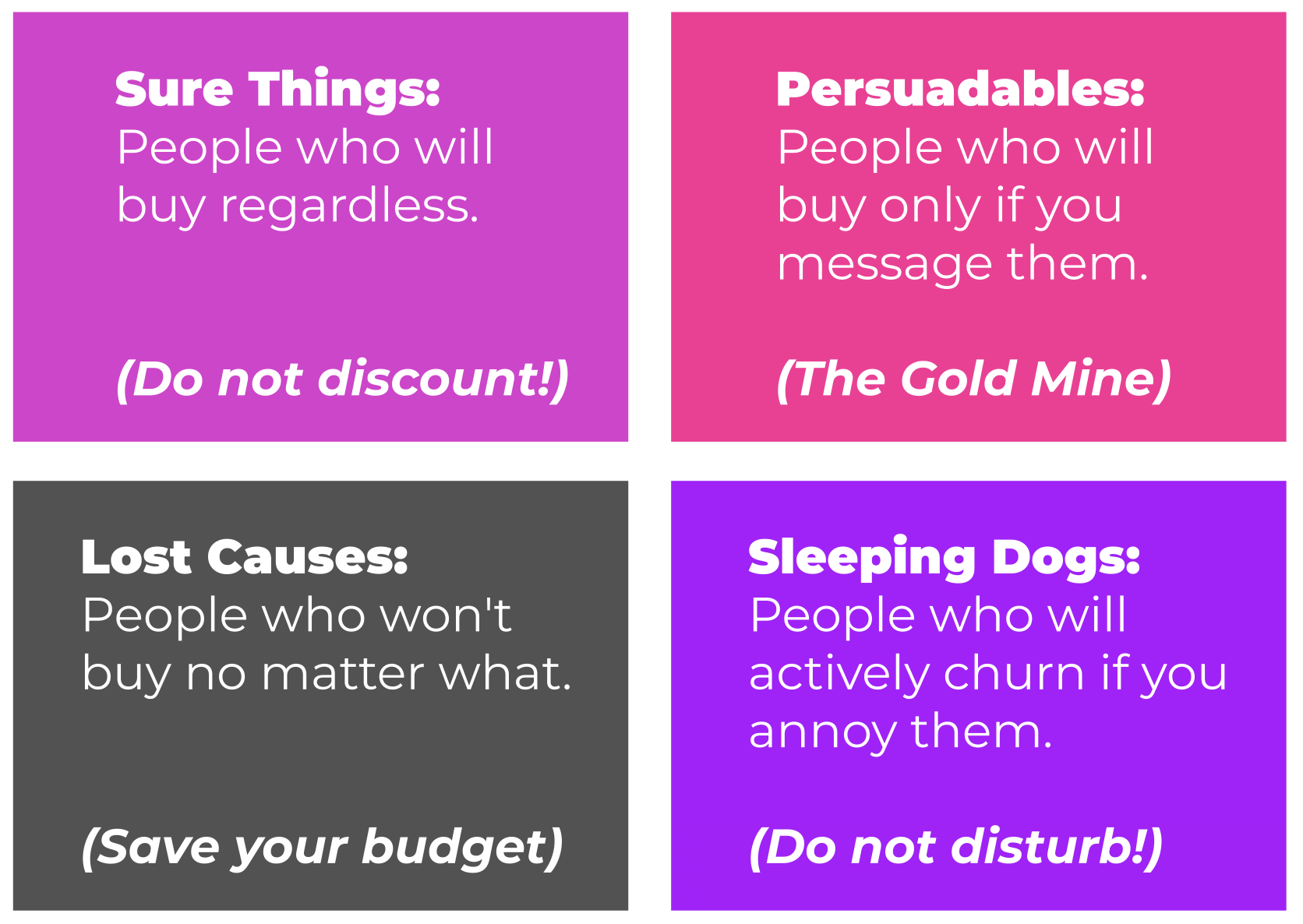
 Causal models also recognize that customers have fundamentally different response patterns. Some customers respond positively to discounts. Others see discounts as a signal of low quality. Some customers appreciate frequent communication. Others find it intrusive. This has nothing to do with their “segment”. It's an individual difference.
By focusing on Uplift (the difference in customer behavior caused only by marketing intervention), Causal AI understands your customers in far more important ways so it can accurately determine their reactions to different types of interventions we could choose:
This paradigm shift takes us to a state where we optimize not just for short-term leading indicators like engagement and campaign response, but also to long-term business impacts like Net Revenue Retention and LTV:CAC ratio - the real value that your company is trying to create.